Designing for the people who keep freight moving
Field research and a mobile app for small carriers, connecting the paperwork, people, and decisions behind every shipment.
- Research
- One week in the field
- Interviews
- Five participants
- Platform
- Mobile app
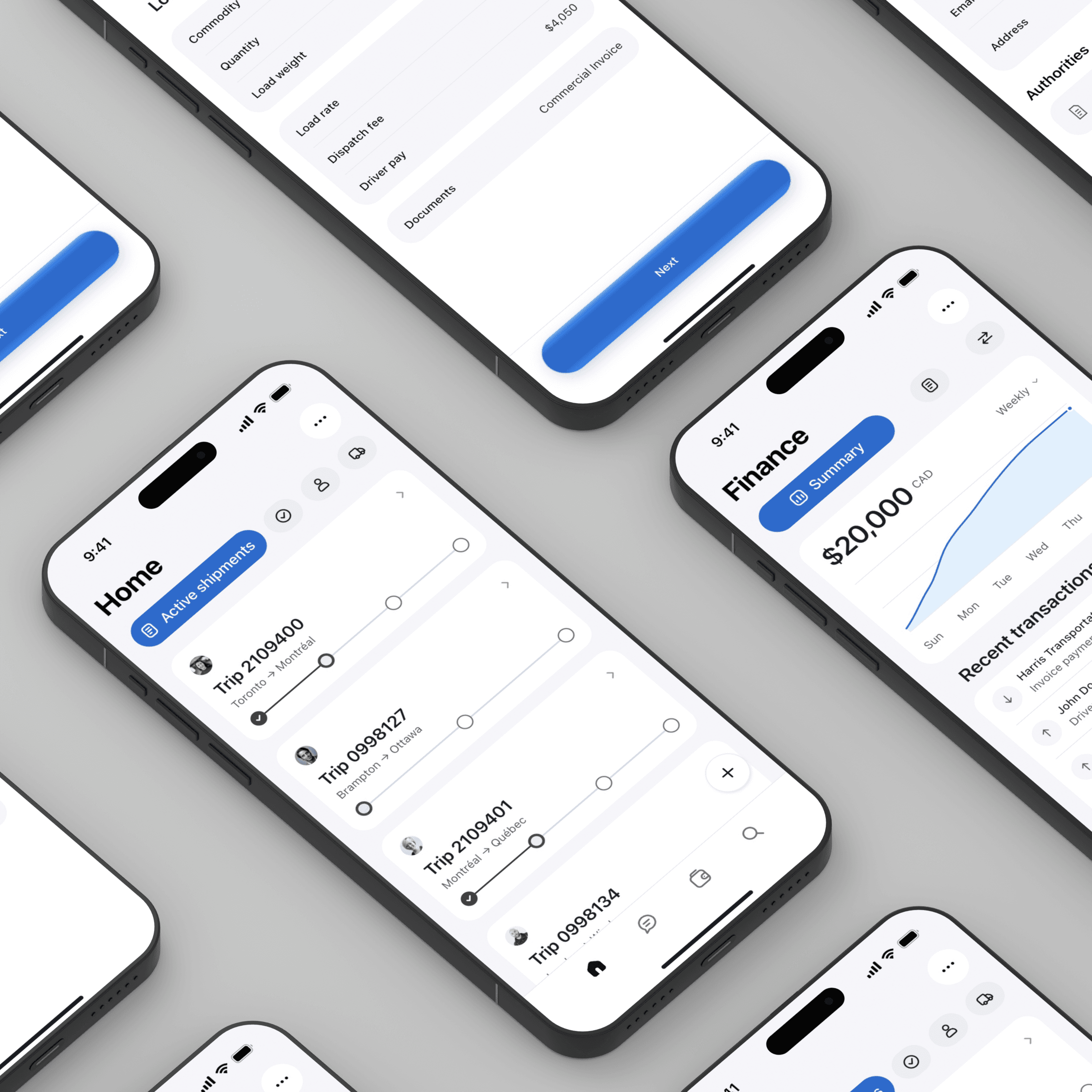
The hidden world of transportation
"Try booking a load," the dispatcher said, handing me the phone. During a week-long field study at a carrier's office, I called a broker and introduced myself. The broker was excited to work with this particular carrier again. That conversation showed me how much the industry depends on relationships and trust.
Small carriers move 70% of North America's freight, yet often work with aging technology and disconnected tools. I wanted to understand how we could simplify the process of getting goods from point A to B.
- Raw Material
- Supplier
- Manufacturer
- Distributor
- Retailer
- Consumer
Discoveries from the field
I spent the week observing the balance between daily operations and compliance. I interviewed two drivers, two company owners, and a dispatcher who also handled administrative work, adjusting the technical questions to each person's experience.
- Heavy Regulatory Burden
- Complex regulations result in extensive paperwork, increasing administrative overhead and time spent on compliance tasks.
- Complex Communication Chains
- Multiple stakeholders involved in each shipment create lengthy communication chains and coordination challenges.
- Limited Growth Focus
- Information processing demands leave little time for strategic business growth and development initiatives.
- Thin Profit Margins
- Dependence on load boards with suboptimal rates leads to reduced profitability and financial constraints.
- Driver Wellbeing Challenges
- Documentation requirements cut into crucial rest and recovery time for already exhausted drivers.
- Time Management Struggles
- Administrative tasks consume significant time that could be better spent on core business operations.
- Technology Integration Gaps
- Lack of unified digital solutions creates inefficiencies in document handling and information sharing.
User interviews
The following interview notes come from someone who worked as both a driver and a dispatcher, a common combination in small businesses.
Let's talk about use cases. Who will be using the app?
The app is primarily going to be used by dispatchers and drivers. There are three types of drivers:
Competitive analysis
I compared transportation management systems across load matching, documents, tracking, billing, and the tools needed to support daily operations.
| Platform | Load matching | Documents | Tracking | Billing | Analytics | Integrations | Customization | Support |
|---|---|---|---|---|---|---|---|---|
| Uber FreightDigital Freight Platform | 3 | 2 | 3 | 2 | 3 | 2 | 1 | 2 |
| ConvoyDigital Freight Platform | 3 | 2 | 3 | 2 | 2 | 2 | 1 | 2 |
| Trimble TransportationTraditional TMS | 2 | 3 | 3 | 3 | 2 | 3 | 3 | 3 |
| McLeod SoftwareTraditional TMS | 2 | 3 | 3 | 3 | 3 | 3 | 3 | 2 |
| KeepTruckinModern TMS | 2 | 2 | 3 | 2 | 2 | 2 | 2 | 2 |
From challenges to opportunities
Dispatchers started their mornings cross-referencing disconnected systems. Drivers pulled over to complete time-sensitive documents. Owners spent evenings checking compliance across paper and digital records. These tasks left less time for customers, rest, and growing the business.
Task analysis
I mapped the work of drivers, dispatchers, and logistics managers into five phases. Each task connects the people doing it, the information they need, and the features that could support them.
Load Acquisition & Initial Documentation
Load Search
Finding and evaluating potential loads
- People
- Dispatcher
- Information
- Equipment availability, Driver HOS status, Load specifications
- Proposed tools
- Load board integration, Equipment tracking, Rate analysis tools
Rate Negotiation
Confirming rates and terms with shipper
- People
- Dispatcher, Sales
- Information
- Market rates, Operating costs, Distance calculations
- Proposed tools
- Rate calculator, Digital contract generation, Communication platform
Initial Documentation
Preparing required shipping documents
- People
- Dispatcher, Admin
- Information
- Customer details, Load details, Insurance information
- Proposed tools
- Document templates, Auto-fill capability, Digital signature
Pre-trip Preparation & Customs Clearance
Equipment Assignment
Matching load with appropriate equipment
- People
- Dispatcher
- Information
- Equipment specs, Maintenance status, Location data
- Proposed tools
- Equipment database, Maintenance tracking, Location tracking
Customs Documentation
Preparing cross-border paperwork
- People
- Admin, Customs Broker
- Information
- Cargo details, Origin/Destination, Vehicle information
- Proposed tools
- Customs form generator, Document verification, Border wait times
Route Planning
Optimizing route and scheduling
- People
- Dispatcher, Driver
- Information
- Traffic data, Weight restrictions, HOS availability
- Proposed tools
- Route optimization, Weather alerts, Rest stop locator
Active Shipment Phase
Progress Tracking
Monitoring shipment location and status
- People
- Dispatcher, Driver
- Information
- GPS location, ETA updates, HOS status
- Proposed tools
- Real-time tracking, Status updates, Alert system
Communication
Maintaining contact with stakeholders
- People
- Dispatcher, Driver, Customer
- Information
- Contact information, Status updates, Delay notifications
- Proposed tools
- In-app messaging, Automated notifications, Customer portal
Compliance Monitoring
Ensuring regulatory compliance
- People
- Driver
- Information
- HOS logs, Route restrictions, Weight stations
- Proposed tools
- ELD integration, Compliance alerts, Digital logbook
Delivery & POD Processing
Delivery Confirmation
Documenting successful delivery
- People
- Driver, Customer
- Information
- Delivery time, Recipient details, Cargo condition
- Proposed tools
- Digital POD capture, Signature collection, Damage reporting
Document Processing
Handling delivery documentation
- People
- Driver, Admin
- Information
- POD, Delivery notes, Customer feedback
- Proposed tools
- Document upload, Auto-filing, Quality check
Post-delivery Compliance & Billing
Invoice Generation
Creating and sending invoices
- People
- Admin, Accounting
- Information
- Rate confirmation, Additional charges, Payment terms
- Proposed tools
- Automated invoicing, Payment tracking, Customer portal
Regulatory Reporting
Completing required filings
- People
- Admin, Compliance Manager
- Information
- IFTA data, HOS logs, Weight records
- Proposed tools
- IFTA calculator, Report generator, Compliance dashboard
Document Archiving
Storing required documentation
- People
- Admin
- Information
- Trip documents, Compliance records, Payment records
- Proposed tools
- Digital archive, Search functionality, Retention tracking
Regulatory requirements
I used the requirements below as a design reference for document storage, reminders, equipment records, and reporting.
International Fuel Tax Agreement Filing
Report of fuel consumption and miles traveled in each jurisdiction for tax purposes
- Applies to
- Vehicles, Business
- Frequency noted
- Quarterly
- Source noted
- International Fuel Tax Association (IFTA)
Commercial Driver's License Maintenance
Maintain valid CDL with appropriate endorsements and medical certification
- Applies to
- Drivers
- Frequency noted
- Every 4 years, Medical cert every 2 years
- Source noted
- Federal Motor Carrier Safety Administration (FMCSA)
Hours of Service Logging
Electronic logging of driver work hours, rest periods, and duty status
- Applies to
- Drivers
- Frequency noted
- Daily
- Source noted
- FMCSA ELD Mandate
Drug and Alcohol Testing Program
Random testing, post-accident testing, and maintaining testing records
- Applies to
- Drivers, Business
- Frequency noted
- Random: Quarterly, Pre-employment: As needed
- Source noted
- FMCSA Drug & Alcohol Testing Regulations
International Registration Plan
Vehicle registration program for interstate commercial vehicles
- Applies to
- Vehicles, Business
- Frequency noted
- Annually
- Source noted
- International Registration Plan, Inc.
Vehicle Inspection Reports
Pre-trip and post-trip vehicle inspection documentation
- Applies to
- Drivers, Vehicles
- Frequency noted
- Daily
- Source noted
- FMCSA Safety Regulations
Heavy Vehicle Use Tax
Annual tax for vehicles with gross weight 55,000 pounds or more
- Applies to
- Vehicles, Business
- Frequency noted
- Annually (Form 2290)
- Source noted
- Internal Revenue Service
Unified Carrier Registration
Registration required for interstate carriers
- Applies to
- Business
- Frequency noted
- Annually
- Source noted
- Unified Carrier Registration Plan
Motor Vehicle Record Check
Review of driver's licensing, violations, and accidents
- Applies to
- Drivers
- Frequency noted
- Annually
- Source noted
- FMCSA Safety Regulations
Accident Register Maintenance
Record keeping of all accidents, incidents, and investigations
- Applies to
- Business
- Frequency noted
- Ongoing (3-year retention)
- Source noted
- FMCSA Part 390.15
Designing around the work
I prioritized a mobile app because drivers and field workers relied on their phones throughout the day. The research led to four design questions.
How might we simplify and streamline document management for shipments?
If we enable users to create and manage orders within the app, they can simplify the document management process by keeping all related information in one place.
Information architecture
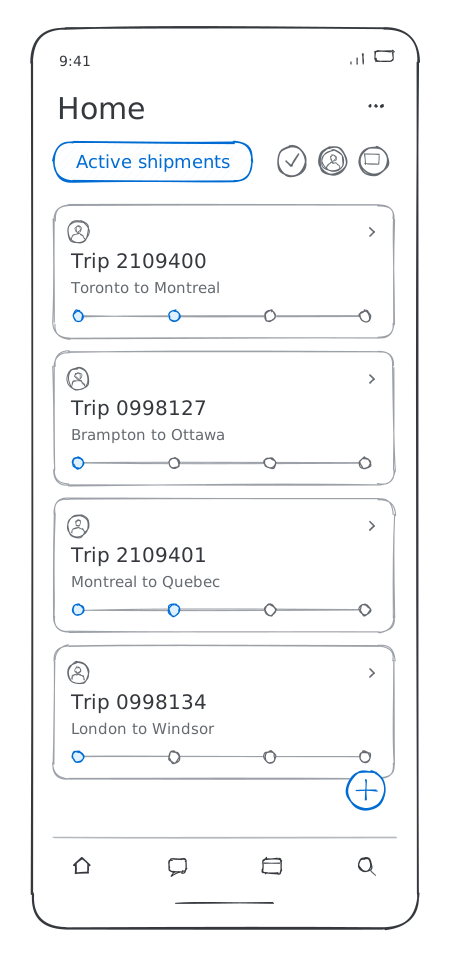
The app brings together five destinations. Shipment details connect to the people, equipment, documents, and payments involved in moving a load.
- Home
- Shipments, equipment, and contacts.
- Chat
- Conversations with drivers, dispatchers, and business contacts.
- New shipment
- Scan an invoice, assign a driver and equipment, and add pickup and delivery stops.
- Finance
- Revenue, expenses, transactions, and invoices.
- Profile
- Account details, payment information, and switching roles.
Sketches
High-fidelity design
I tested the primary user flows with end users after creating the initial wireframes. Their feedback guided refinements to the final interface.
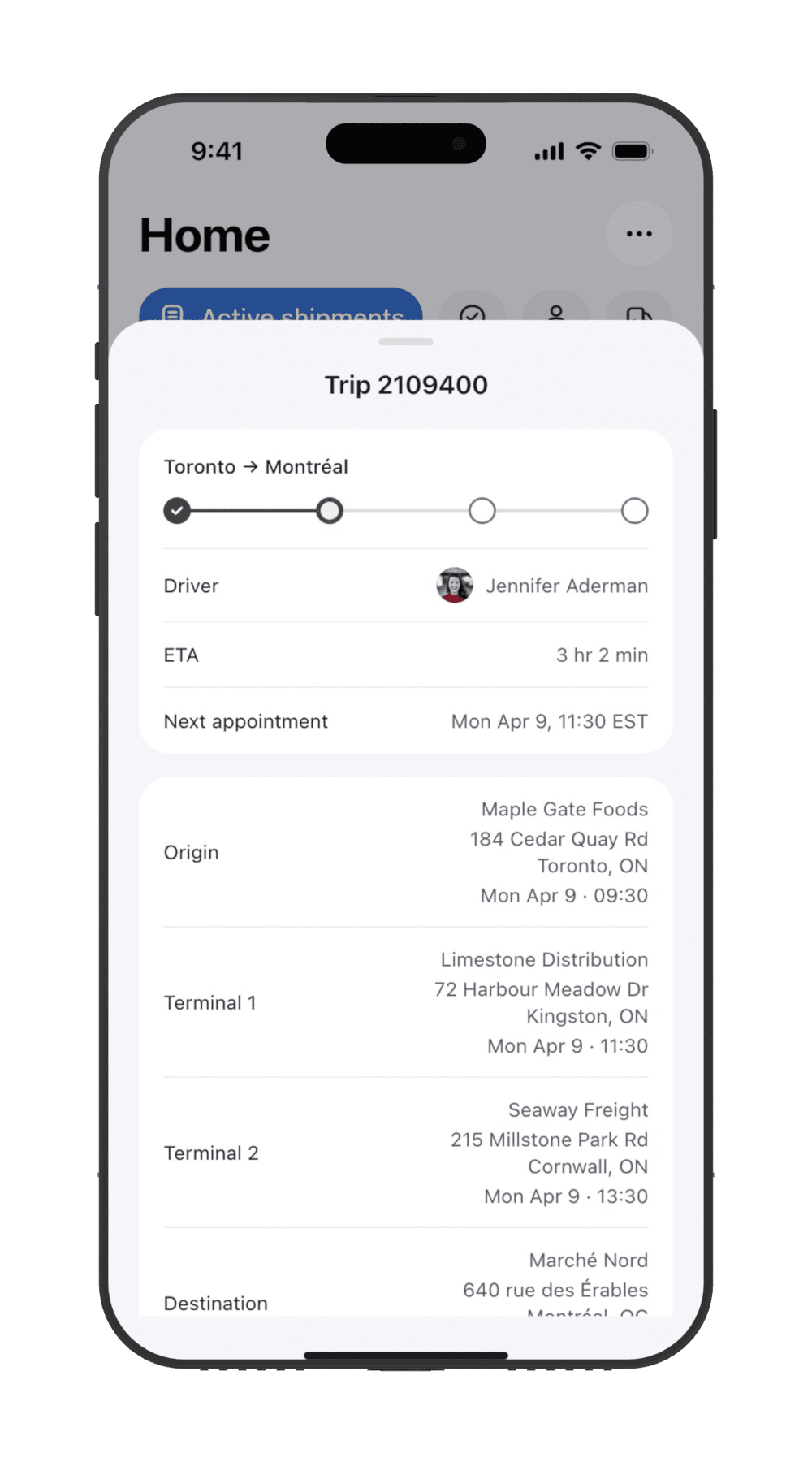
Track a shipment, then see the next stop
The task analysis calls for shipment status, ETA updates, and contact information. Progress tracking and communication
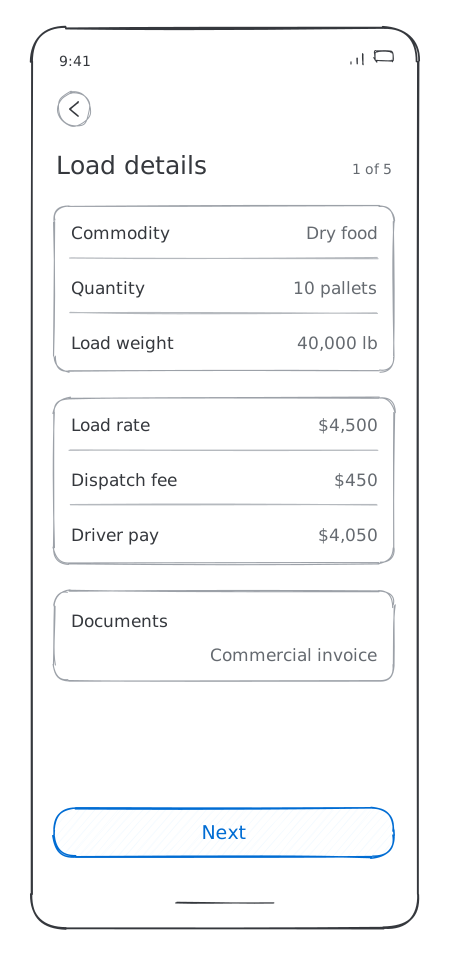
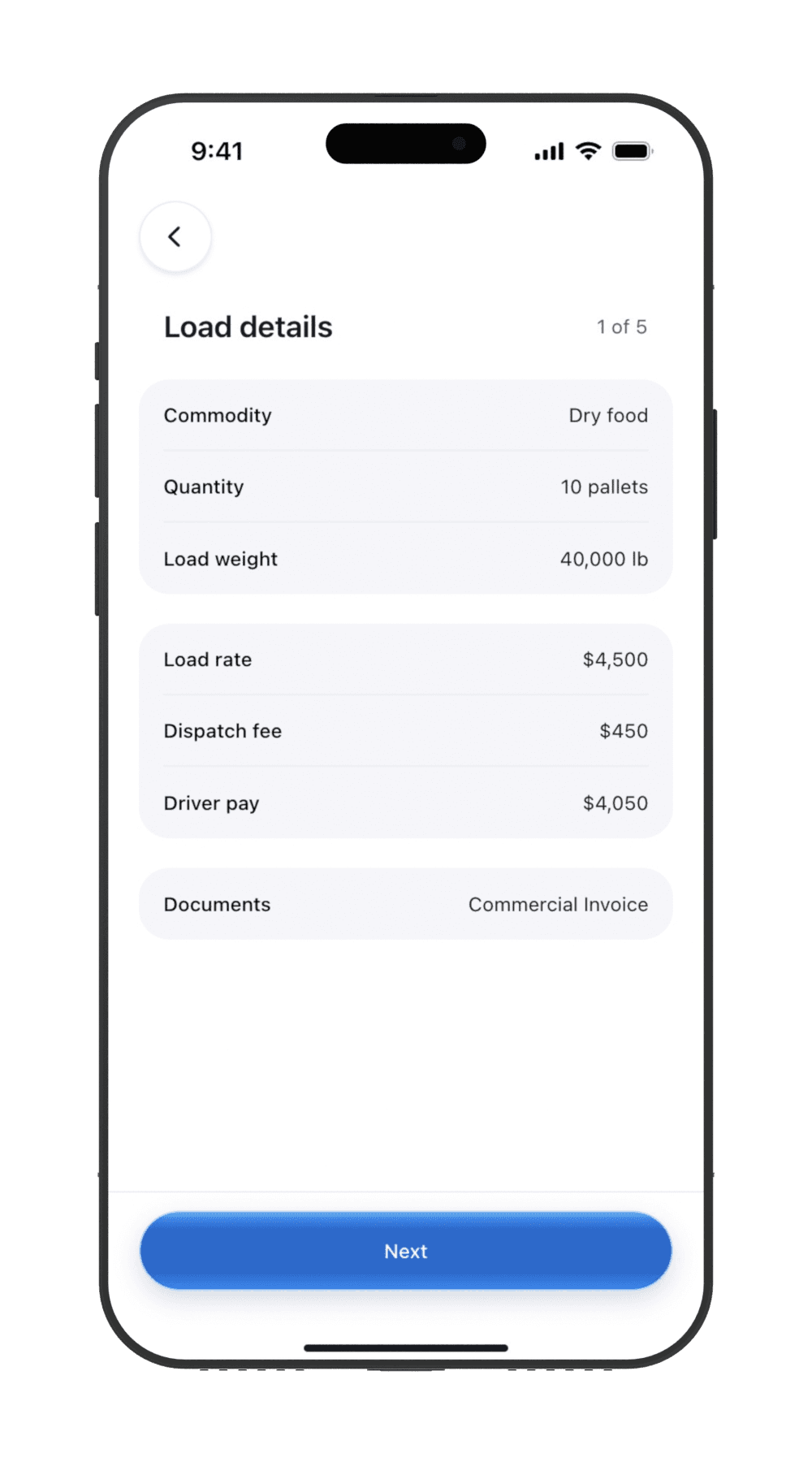
Keep load and payment details together
The interview describes creating a shipment order, then preparing invoices and driver payments. User interviews
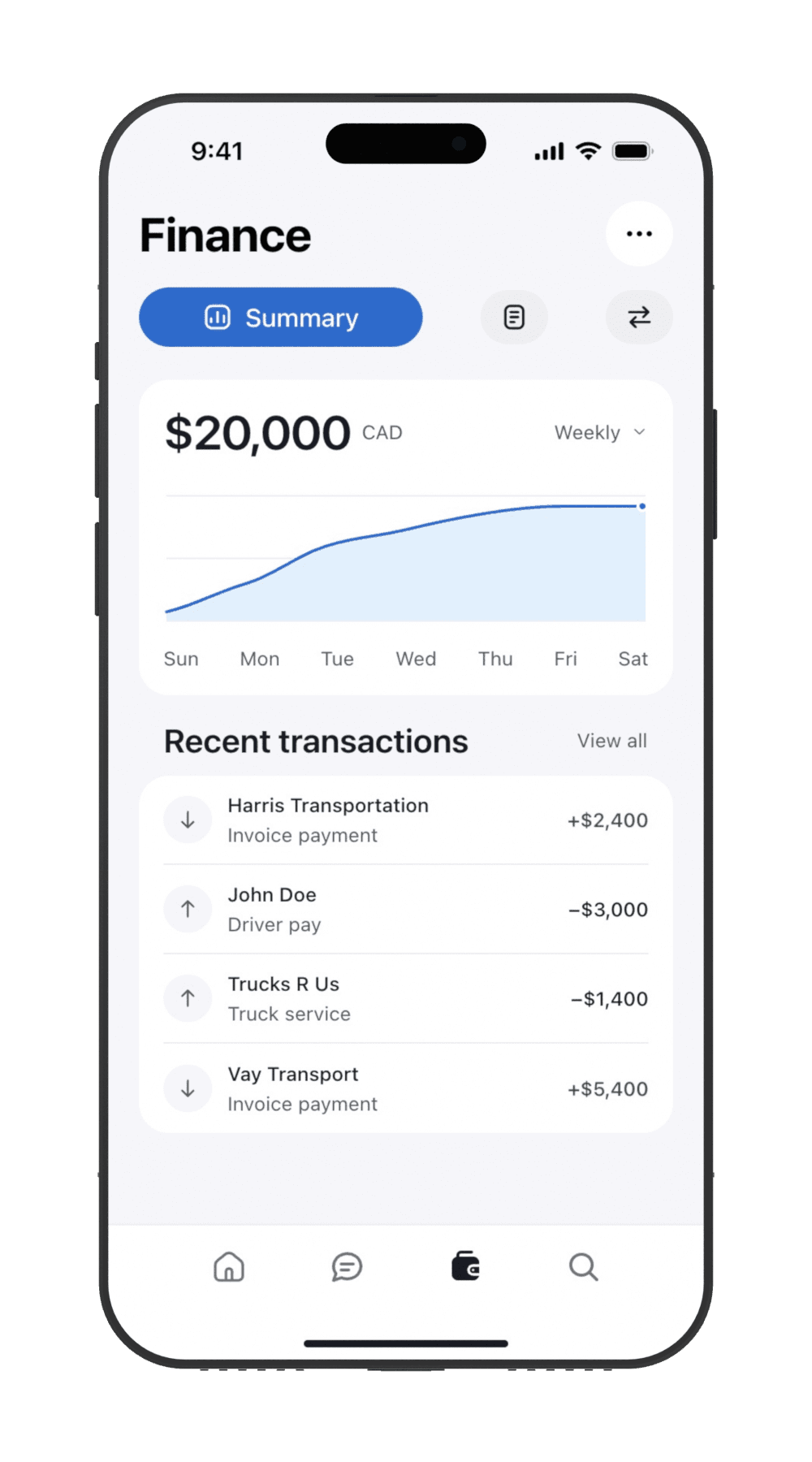
Bring revenue into view
The study identified thin profit margins and time spent on administration. Research insights
What I learned
- Small carriers, despite moving 70% of North America's freight, have been largely overlooked by technology companies. Most existing solutions are built for large enterprises, leaving smaller operations to cobble together multiple tools or rely on manual processes.
- The industry's strength lies in its relationships. Our field study revealed how trust between carriers, brokers, and customers drives business success. Any technological solution must enhance, not replace, these vital connections.
- Mobile-first solutions are essential. Our observations showed that drivers and dispatchers rely heavily on their phones, yet most existing software platforms are designed primarily for desktop use.
- Documentation and compliance aren't just administrative tasks: they're critical business functions that directly impact a carrier's ability to win contracts and maintain relationships with brokers. When small carriers struggle with these processes, it creates a ripple effect throughout the supply chain
The road ahead
The next phase of the work focused on continuing the research and developing tools around the relationships observed in the field.
- Expanding our user research to include more diverse carrier operations
- Developing new features based on observed user workflows
- Creating tools that strengthen the trust-based relationships we've observed in the industry